BLISS
2025 Video Installation (10 minutes)
Ticho House, The Israel Museum, Jerusalem
Curator of Ticho House: Timna Seligman
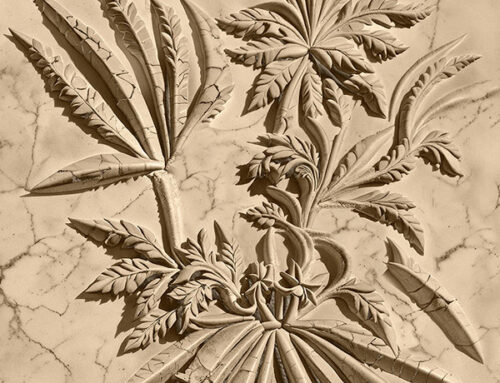
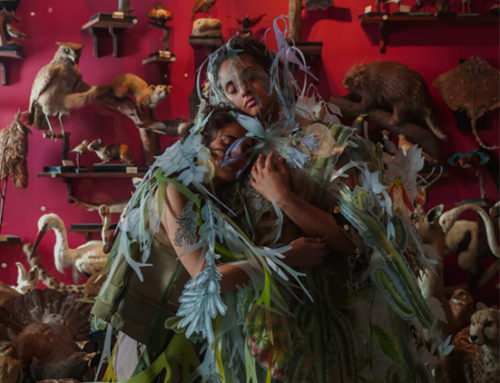
Thematically connected to the video works inside Ticho House, the two site-specific works shown in the garden were inspired by its vegetation. In the first, leaves and branches were digitally processed to create the illusion of stone relief tablets embedded in the façade of the house, thus echoing the ancient mythological and architectural motifs alluded to in Bliss and Zahara. The three-screen video work shows an infinite loop of movement, a wave and shudder of leaves and bodies. The leaves and branches, like Zahara’s wing, are on display in the house. Both were created through a long process of observation and craft by Carmi. Whether wing or leafy branch, each element was meticulously prepared taking care to consider the changing shades of the leaves as the seasons unfold and the colors of the shimmering feathers dependent on where on the wing they are placed. Through these objects and their use in the videos, Carmi, the painter and sculptor and Heiman, the photographer highlight their own separate disciplines complimented in the performative aspects of the videos.
Together the two works in the garden address our disconnection from the soil and from nature. Natural materials are transformed into something unnatural: painted plastic leaves and feathers, digital images. Even as Carmi and Heiman engage with the subject of sustainable harmony with nature, they also point out our distance from it.
Ayelet Carmi and Meirav Heiman: Bliss
Timna Seligman
Senior curator, Ticho House
Resonating with Dahlia Ravikovitch’s classic Israeli poem Hemdah (Bliss), which yearns for a time that once was and could be again in the future, the exhibition Bliss brings together two major video works by Ayelet Carmi and Meirav Heiman. It premieres their latest large-scale work, Bliss, 2025, alongside the first museum presentation of Zahara from 2021. These very different videos are both visions of a life experience seen through a female gaze, and together they construct a parallel world – one that seems to be familiar, although not of this time and place. They conjure up a dystopian universe, a world that comes in the wake of an existential trauma and yet embraces the ambition to create a new utopia. Manifesting the shared artistic language found in works Carmi and Heiman have been creating together since 2014, they continue the artists’ discussions about femininity, the connection to nature and homeland, and the fragile Israeli reality.
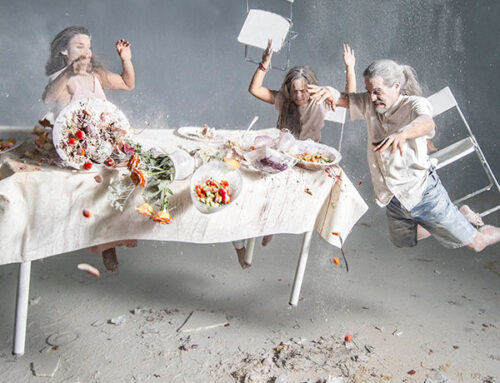
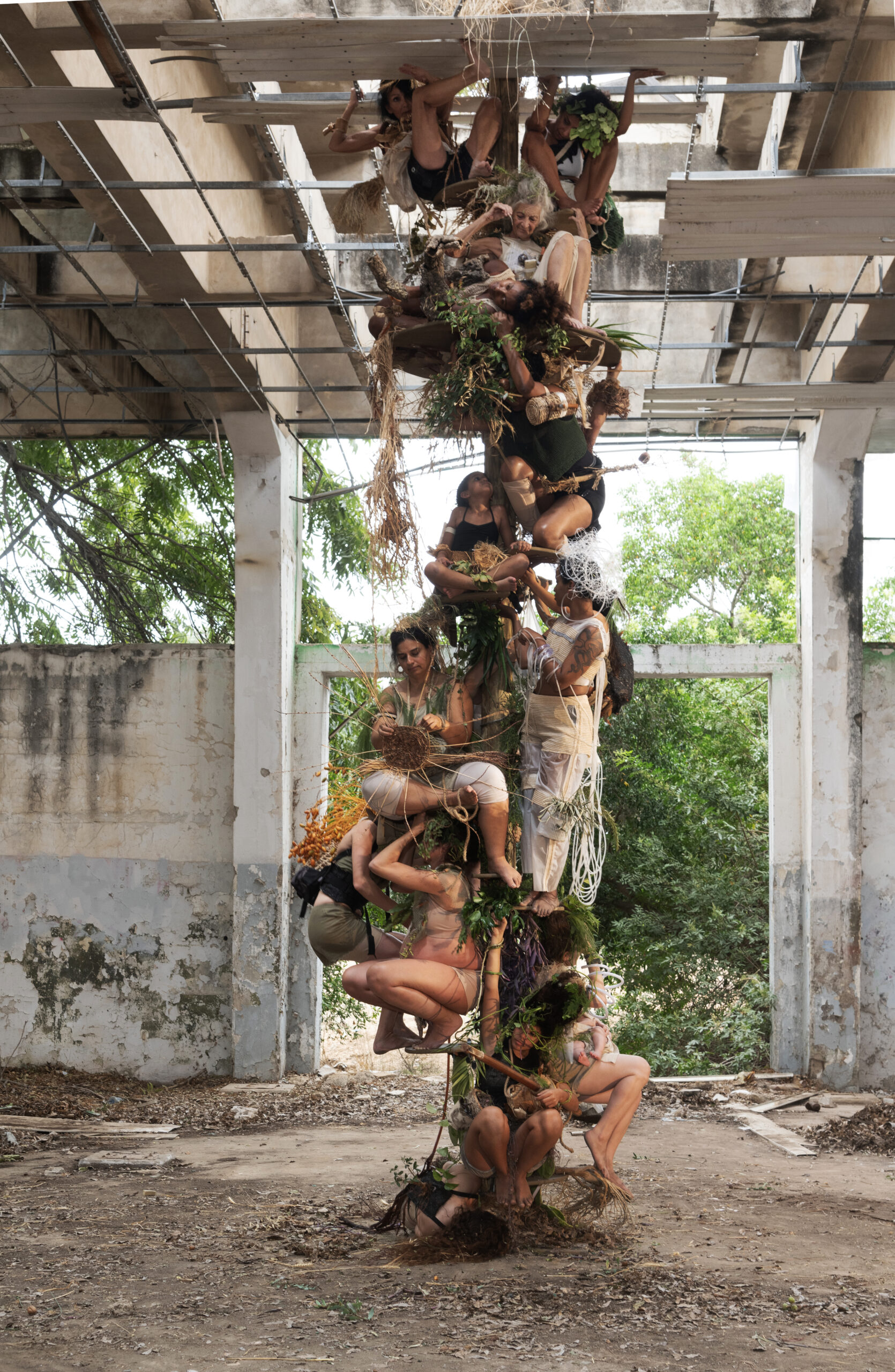
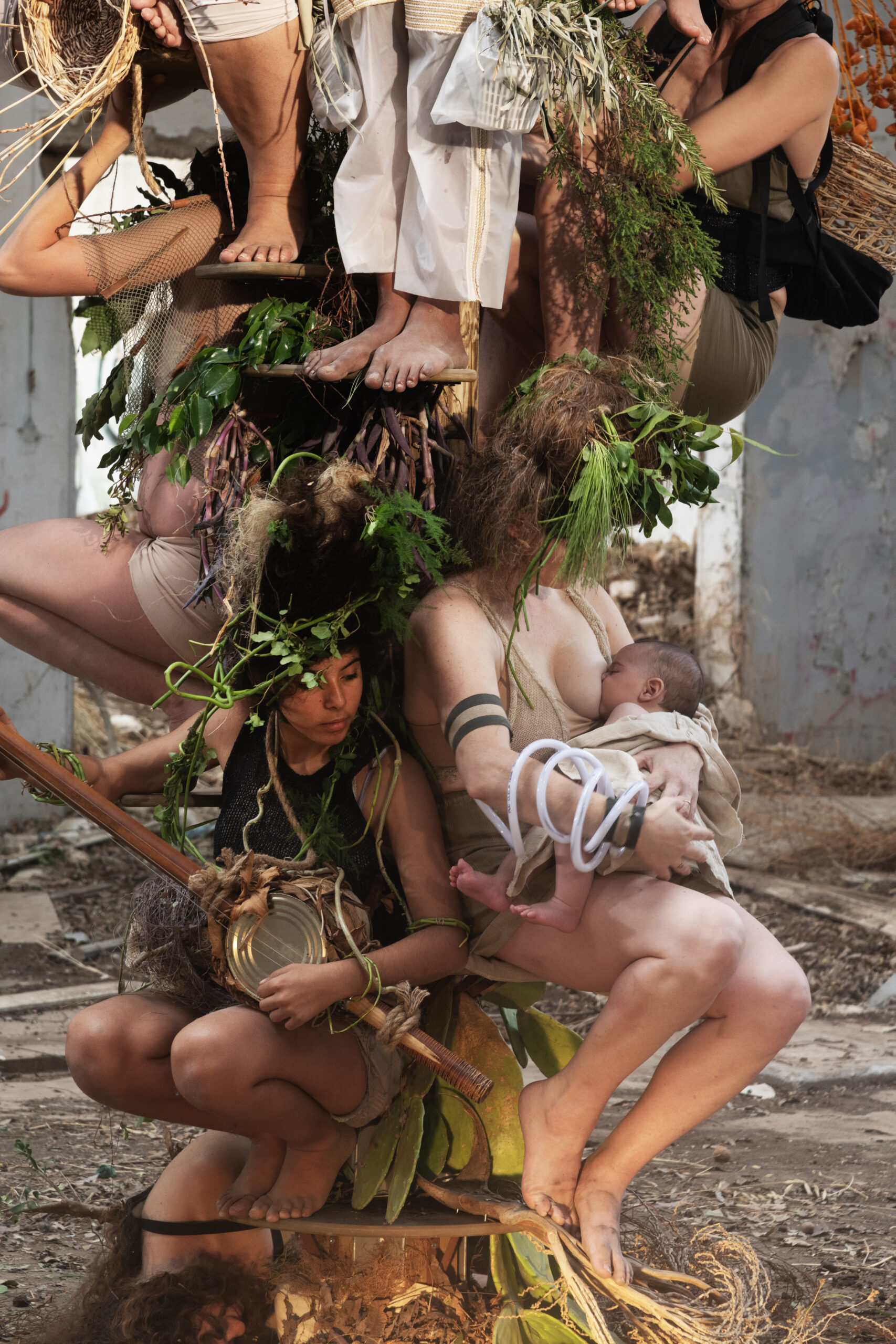
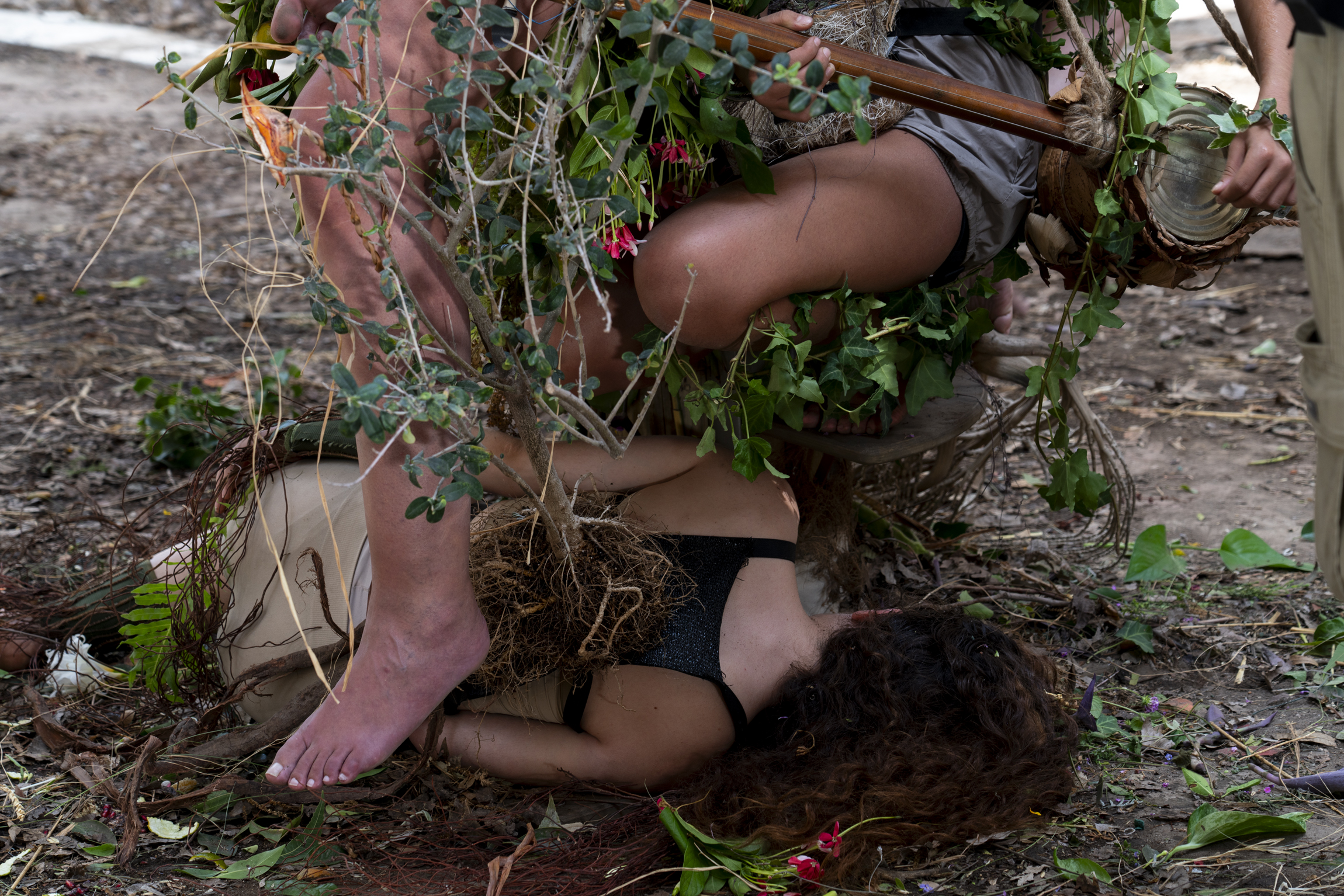
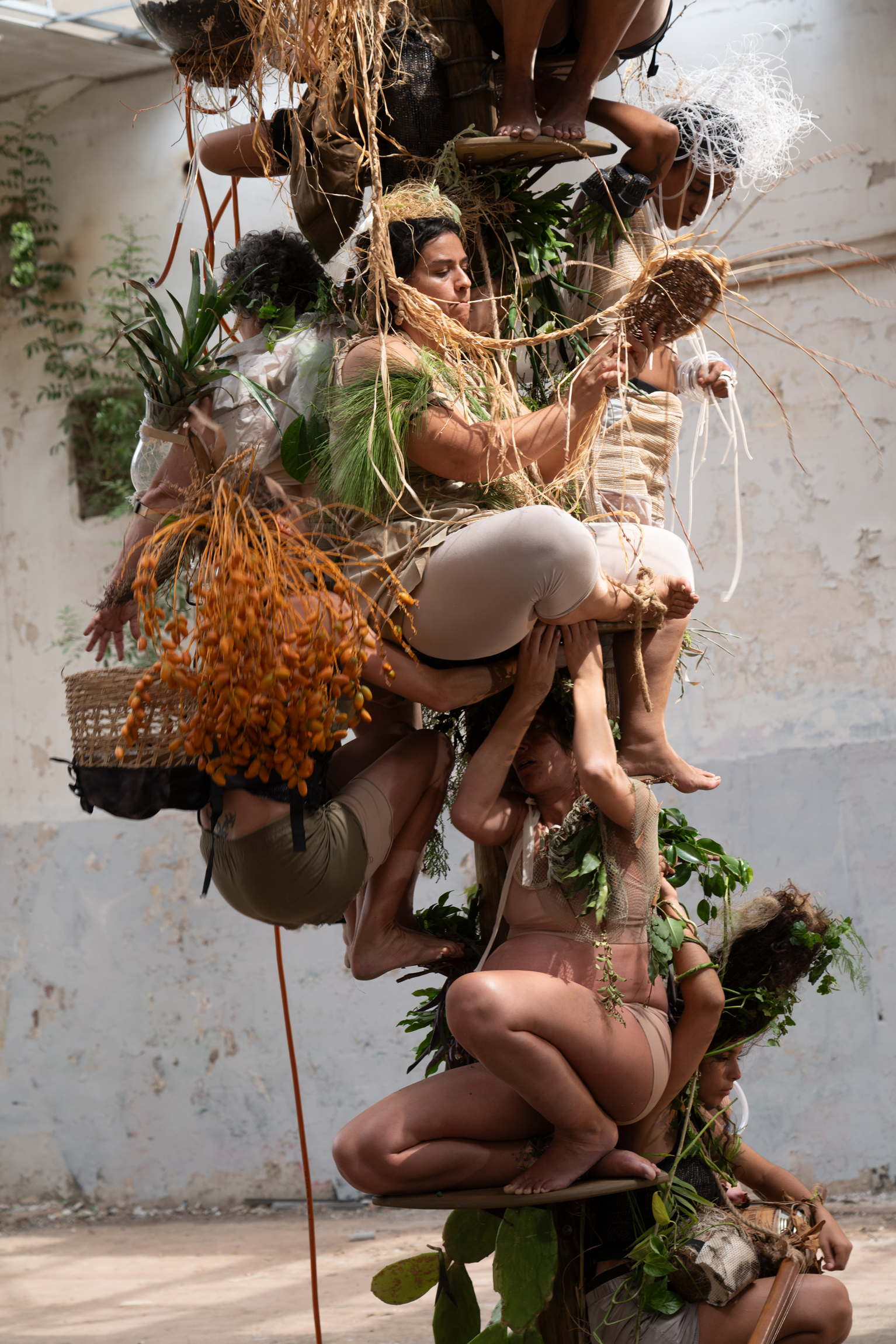
As we approach the gallery, a woman’s voice echoes softly through the space, making the female presence known even before we see the video Bliss. Once we fully enter the space, we are met with a wide shot of female figures who hold plants and flowerpots in their hands while they run through a deserted field toward an abandoned building. As the work unfolds, we are exposed to a female world that exists in a new reality but is rooted in tradition and folklore. Having made their great escape from ordinary existence, the women create a self-sufficient “bio-system” for themselves and are transformed into a living column that also attempts to support the rickety ceiling of the abandoned building. All stages of life are represented: prepubescent girls; teenagers; young women, including one who is pregnant and another who nurses an infant; and older women. As they create their tribal column, each woman has a specific role within the community, usually related to sustenance and the cycle of life – one peels fruit and feeds her friends, one takes the remains for composting, one sprouts the seeds, and one is healer.
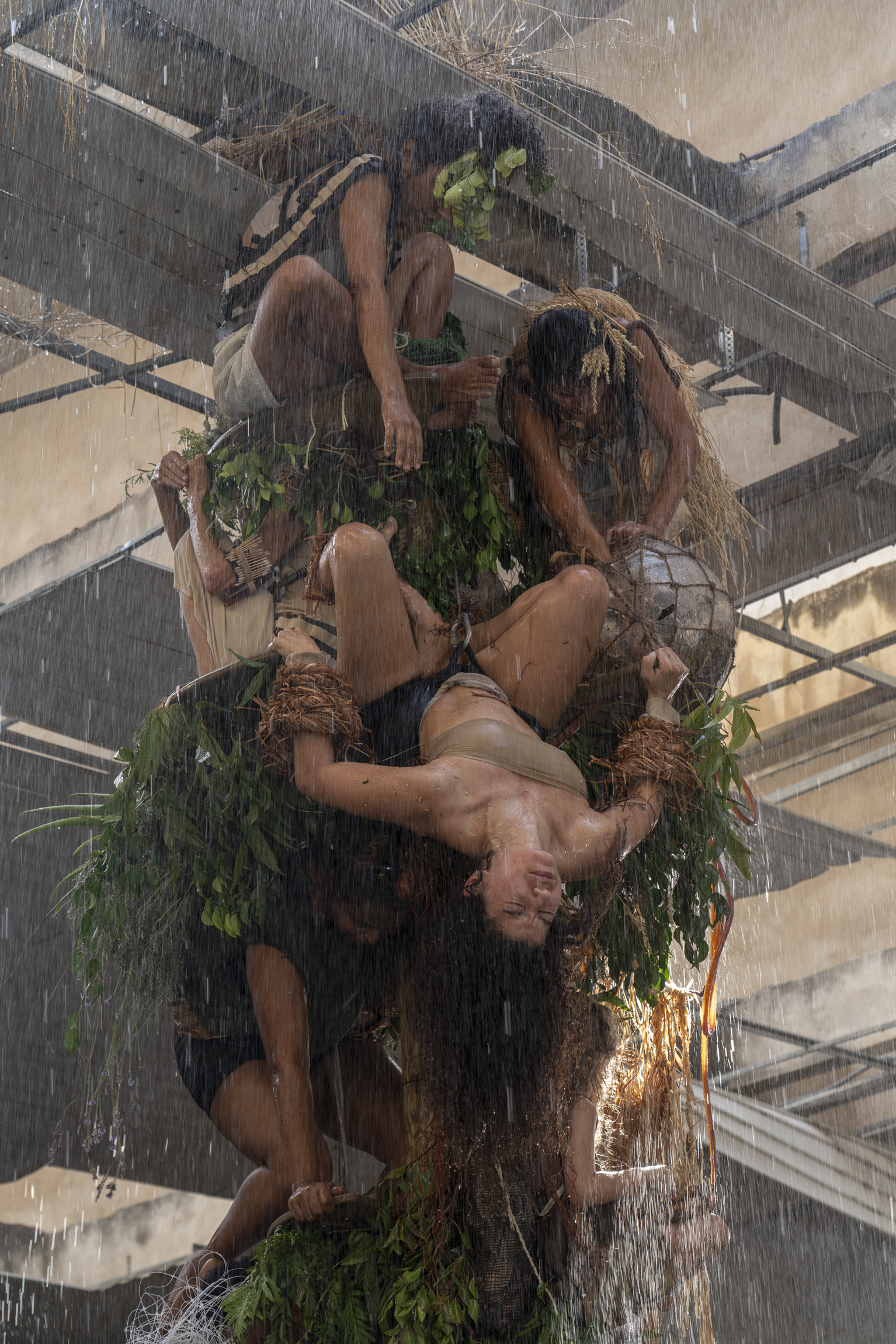
The camera returns a few times to the old healer who applies salves to a young woman whose arm is turning into bark, indicating her metamorphosis to a tree. The myth of Daphne – who became a laurel tree in a desperate attempt to escape the advances of Apollo – is unfolding before our eyes, perhaps also suggesting a reason for the film’s initial scene of fleeing women. The primary image of the work – the female column – draws inspiration from Greek caryatids: architectural supporting columns carved as female figures. This term translates as “maidens of Caryae” – an ancient town near Sparta with a temple dedicated to the goddess Artemis. Caryatids are linked to Artemis and possibly also to the women of the Caryae, who were enslaved after the town betrayed Athens. In Bliss, the women wind themselves around a column, and over time the column becomes a living human pillar.
Messages of feminism and ecological sustainability are woven into the work, as we see the seasons pass and the women able to feed and heal themselves. The land itself no longer exists; what remains is the idea of nature and the land, represented by its characteristic flora from biblical times to the present: pomegranates, dates, carobs, almonds, walnuts, the Wandering Jew plant, pine trees, and more. Just as the allegoric wandering Jew was condemned to be cut off from his land, the women seen here must create an organic community and independent economy while detached from the land. In the alternate reality produced by this rupture, they are condemned to be the building’s supporting pillar. To remain fixed in place indefinitely, to weather natural disasters, to evolve slowly into a new life form. Through this trauma, and it is worth noting: the opening scene where all the women run for their lives was shot on the project’s last day of filming, October 3, 2023; four days later, this scene became a chilling and prophetic reflection of our reality here in the land of Israel. So yes, through this trauma, within the rhythm of the seasons and demands of nature, the question remains, did they attain bliss.
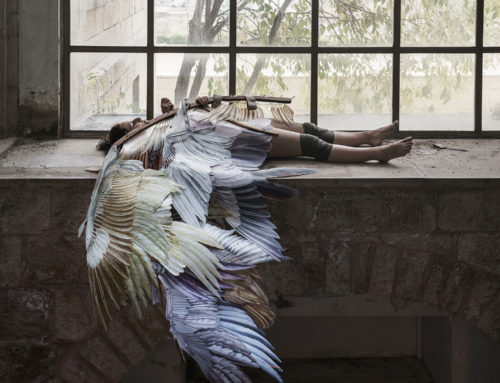
Zahara, the earlier work that complements Bliss, follows the tragic story of its namesake in a dreamlike sequence. Zahara Levitov (1927–1948), a heroic woman pilot serving in Israel’s armed forces at the time of the establishment of the state, was killed when her plane malfunctioned and crashed into the outer wall of the Monastery of the Cross in Jerusalem. The narrative reimagines the Zahara’s final journey, in which she is aided by an older woman – a figure representing Ruth Dayan, the wife of Moshe Dayan, military commander of West Jerusalem at the time, who arrived on the scene and assisted in bringing the mortally injured young pilot to the hospital. The video follows the two protagonists as they make the final journey, dragging an enormous broken feathered wing, referencing both Zahara’s airplane and the story of Icarus. The constantly present wing, both weighty and ephemeral, suggests the fate of a once-vital limb now rendered useless.
Set in present-day Jerusalem, deeply intertwined with the city’s modern history and mythology, Zahara offers a soft yet powerful vision of female mutual support and empathy. The characters’ surroundings and states of mind shift, we are witness to dreamlike journeys and bustling cityscapes, culminating in a poetically choreographed, gentle release from life.
Despite their differences, both of these works exemplify the conceptual world of Ayelet Carmi and Meirav Heiman: an archetypal female world that is based on larger-than-life historical figures, while presenting ordinary women with whom anyone can identify or empathize. The exhibition also connects to Anna Ticho, who over the years has attained the status of the mother of artists in Israel. It is interesting and even inspiring to read Carmi and Heiman’s works through the prism of the Tichos’ Jerusalem legacy and the art of Anna Ticho, whose drawings are so embedded in the city and its surroundings and number so many portraits of women who lived in Jerusalem. As can be seen on the gallery walls, she had an eye for female archetypes, young and old. Her aging women of wisdom resonate with the subjects of Carmi and Heiman’s video works. Positioned within the context of Ticho’s portraits, their contemporary explorations reflect the cultural and historical landscape of Jerusalem, bridging past and present.
Thematically connected to the video works inside Ticho House, two new lightbox images, Fern and Eucalyptus and an additional three-screen video work entitled Endless Days and Sleepless Nights can be viewed in the garden of Ticho House. These site-specific works were inspired by the garden’s vegetation. In the light boxes, digitally processed leaves and branches create the illusion of stone reliefs embedded in the façade of the house, thus echoing the ancient mythological and architectural motifs alluded to in Bliss and Zahara.
The three-screen video work shows an endless loop of movement, a gentle trembling of leaves caused by the human bodies underneath. The leaves and branches themselves, the result of a long process of observation and craft, are on display in the house. Carmi meticulously prepared these recreations of vegetation, as well as Zahara’s wing (also on display inside), while carefully taking into account the changing shades of the leaves as the seasons unfold and the interaction of the shimmering feathers’ colors. Thus the respective disciplines of Ayelet Carmi, a painter and sculptor, and photographer Meirav Heiman complement each other, with the crafted objects assuming a performative dimension in the videos.
The two works experienced in the garden drive home our disconnection from the soil and from nature. Natural materials are transformed into something unnatural: painted plastic leaves and feathers, digital images. Even as Carmi and Heiman engage with the subject of sustainable harmony with nature, they also point out our distance from it.